DeFi News Hub
Live updates • Sourced from The Defiant and Decrypt DeFi
2026 is shaping up to be a huge year for games, with major sequels, long-awaited releases, and big new projects already lined up.

Bitcoin at $200,000? Massive volatility? Experts predict where the markets are headed—and it's probably not another winter.

The pardons cemented crypto as both an economic force and a partisan issue in Washington.

In what many hoped would be crypto’s biggest year ever, most altcoins had a torrid time, consistently underperforming Bitcoin (BTC) and traditional assets.
Since the beginning of the year, the S&P 500 is up 17%, while BTC is down 6%, and the TradingView category “Others,” which represents the altcoin space, is down a brutal 43%.
While BTC struggled relative to traditional financial assets and even outperformed for a portion of the year, the altcoin space was completely destroyed.
To continue reading this as well as other DeFi and Web3 news, visit us at thedefiant.io

While many crypto traders are ready to put a tumultuous year behind them, President Donald Trump’s media company, Trump Media, just announced plans to launch a new digital token for its shareholders, showing there’s not a dull moment in crypto – not even New Year’s Eve.
According to a press release, the token generation event (TGE) is expected to launch “in the near future” via Crypto.com and its Cronos blockchain.
Each owner of DJT shares will be eligible to receive one of the new tokens per whole share, the release said. The token will not represent an ownership interest in Trump Media or any other entity.
To continue reading this as well as other DeFi and Web3 news, visit us at thedefiant.io

Crypto firms faced a record $2.72 billion in theft this year as attackers expanded their reach across major exchanges and DeFi platforms.

As the crypto industry becomes more powerful, entrenched competitors in traditional finance are starting to gear up for battle.

The top-performing large-cap cryptocurrency of the year isn’t Bitcoin, but Zcash, which has surged more than 800% as investor interest in privacy-focused tokens took center stage.
ZEC was trading at $506 at publication time, up sharply from roughly $60 in January, according to CoinMarketCap. And the rally has far outpaced major cryptocurrencies of at least $1 billion in market capitalization.
By comparison, Bitcoin (BTC) is down 6.2% year-to-date to $87,637, while Ether (ETH) has fallen 10% to $2,977.
To continue reading this as well as other DeFi and Web3 news, visit us at thedefiant.io

From Grok’s “MechaHitler” meltdown to North Korea’s “vibe-hacking” ransomware, 2025 was the year AI stopped pretending to be smart and started acting unhinged.

Netflix has just announced an upcoming crypto comedy film—but why has it taken so long for the industry to hit the silver screen?

Major cryptocurrencies traded mainly flat or slightly higher on Tuesday, Dec. 30, as markets remained quiet near year-end and overall trading activity stayed light.
Bitcoin (BTC) rose 0.8% over the past 24 hours to around $88,040, while Ethereum (ETH) gained just over 1% to $2,966, according to The Defiant’s price page. BNB climbed 0.7% to $857, XRP advanced 0.9% to $1.87, and Solana (SOL) rose 0.6% to $123.93.
To continue reading this as well as other DeFi and Web3 news, visit us at thedefiant.io

It’s been a volatile 48 hours for Base ecosystem supporters, with spirits reaching rejuvenated highs after the viral video journalist, Nick Shirley, released a creator token on Base via Zora, only for it to crumble less than two days later, with the token dropping by 80%.
As a result, ZORA is having a rough day, falling more than 4% to $0.038 over the last 24 hours, despite BTC and ETH posting modest gains of around 1% today.
To continue reading this as well as other DeFi and Web3 news, visit us at thedefiant.io

Users on decentralized perpetuals exchange Lighter reported problems withdrawing assets today, Dec. 30, shortly after the platform announced and launched its native LIT token overnight.
According to reports from Wu Blockchain, as well as traders on X, the Ethereum Layer 2 DEX appears to have stopped processing withdrawals normally as of this morning. Some analysts said the delay may have been caused by Lighter’s system falling behind while handling increased withdrawal requests, with users reportedly receiving an error message “Too many L2 Withdrawals.”
As of press time, Lighter, which has a total value locked (TVL) of nearly $1.5 billion, has not released a public statement about the reported issues on the platform. The Defiant contacted Lighter for comment, but the team has yet to respond by press time.
To continue reading this as well as other DeFi and Web3 news, visit us at thedefiant.io

Bitcoin and crypto ATMs faced heightened scrutiny in 2025, as authorities and lawmakers tried to confront a growing number of scams.

Btc: 87k (0%) | btc.D: 59.0% (0%). Eth: 2975 (1%) | bnb: 855 (+1%) | sol: 124 (0%). Tom Lee bought another $130M in ETH for Christmas, and still holds $1B in cash heading into the new year. REKT drinks and WorldStarHipHop tease collab. BlackRock’s BUIDL hits $100M million in dividends and passes $2 billion in assets. Metaplanet buys 4,279 bitcoin, lifts total holdings to 35,102 BTC. Unleash Protocol hit by $3.9 million exploit with funds routed through Tornado Cash. Onchain Perpetuals Top $1T Monthly Volume as Crypto Traders Chase Leverage. South Korea’s Crypto Regulation Delayed as Stablecoin Rules Face Deadlock. Abundant Mining CEO says Bitcoin price volatility hasn’t slowed mining demand.

Stablecoins exploded in 2025 with new regulations, banking charters, and a $306 billion market cap—but not all issuers had smooth sailing.

The NIGHT token outperformed the broader crypto market on Monday, Dec. 29 after Charles Hoskinson suggested it could help expand decentralized finance (DeFi) across blockchain ecosystems, including XRP.
A partner chain to Cardano, Midnight is a privacy-focused blockchain built for confidential transactions and private DeFi, with NIGHT serving as its native token. Hoskinson is a co-founder of Ethereum and the founder of Cardano.
NIGHT rose more than 11% over the past 24 hours, according to CoinGecko. The rally comes after Hoskinson said in a post on X that adding Midnight to XRP’s ecosystem would “blow the legacy banks out of the water.”
To continue reading this as well as other DeFi and Web3 news, visit us at thedefiant.io

Coinbase Chief Executive Officer Brian Armstrong just helped onboard viral grassroots journalist Nick Shirley to Coinbase-led Ethereum Layer 2 Base.
Last week, Shirley uncovered a multimillion-dollar daycare fraud in videos that have gone viral, amassing more than 100 million impressions.
Shirley created and launched his verified creator coin on Base on Dec. 28, dubbed $thenickshirley, and Armstrong shared the new launch on X, saying, “Let’s go - good case study in how content monetizes better on Base vs other platforms. More examples coming soon.”
To continue reading this as well as other DeFi and Web3 news, visit us at thedefiant.io

This year delivered a full-on ninja and samurai takeover, with a wave of new releases offering more katana-heavy action than ever before.

Uniswap’s UNI token fell by as much as 6% on Monday, Dec. 29, after Uniswap Labs confirmed it had burned 100 million tokens over the weekend, making UNI one of the weakest performers among the top-100 cryptocurrencies today.
UNI is currently trading at $5.95, recovering slightly from earlier lows but still down about 4% on the day. The token burn, announced on Dec. 27, was part of a broader update called “UNIfication,” which included the long-awaited fee switch for the protocol.
As part of the change, interface fees on Uniswap Labs’ frontend were set to zero, while trading fees remain active on Uniswap v2 and some v3 pools on Ethereum mainnet. The update also allows certain protocol fees to be used to buy back and burn UNI over time.
To continue reading this as well as other DeFi and Web3 news, visit us at thedefiant.io

Dapper Labs’ Layer 1 blockchain Flow is up and running again after a $3.9 million exploit on Dec. 27 that caused more than 24 hours of downtime, and a drastic drop in token price.
The FLOW token dropped 40% from a $280 million market capitalization to $170 million early Saturday morning. Despite resuming activity earlier today, FLOW holders are yet to experience any relief bounce.
To continue reading this as well as other DeFi and Web3 news, visit us at thedefiant.io

The term "creator capital markets" was coined in 2025, with Pump.fun investing heavily into its livestreamer ecosystem.

Major digital assets traded mostly lower on Monday, Dec. 29, as markets remained subdued during the holiday period and investor activity stayed light ahead of year-end.
Bitcoin (BTC) slipped 0.4% over the last day to $87,387, after briefly reaching above $90,000, while Ethereum (ETH) fell 0.5% to $2,930. Other large-cap tokens also declined. BNB dropped just over 1% to $852, XRP fell 0.5% to $1.86, and Solana (SOL) declined 1% to $123.
To continue reading this as well as other DeFi and Web3 news, visit us at thedefiant.io

Btc: 87k (-1%) | btc.D: 59.0% (0%). Eth: 2953 (-3%) | bnb: 853 (-1%) | sol: 124 (-3%). The White Whale goes almost 15x in a week, from $5m to $71m mcap. Lighter TGE rumours stirring. YouTuber Nick Shirley reveals mass fraud in Minnesota daycare system. Gold & Silver prices see huge dump

The crypto lobby is becoming convinced their coveted bill can’t pass Congress next year. Just how crucial is it?

Prediction markets hit $2B in weekly volume as regulatory hostility faded and mainstream players from CNN to the NHL jumped on the trend.

Indie developers dropped some of the year's best games, including some offbeat insta-classics. Here's what you might have missed.

From Anthropic to Z.AI, the 2026 AI toolkit space demands knowing which platforms deliver. These are the best.

This year, ETFs opened several new doors to crypto on Wall Street, as the SEC forged a fresh approach to the products.

Advances in quantum computing this year clarified timelines and forced a reassessment of Bitcoin’s future security

Bitcoin whales emerged from their slumber in 2025, some after a decade or more, moving billions and cashing in as BTC surged to new highs.

Crypto companies rushed to Wall Street in 2025, with Circle, Bullish, and eToro going public while Kraken lined up for its market debut.

Prediction marketplace Kalshi saw its spot volumes hit a new record for the week ending on Dec. 21, notably surpassing its main rival Polymarket’s activity.
According to Artemis data, Kalshi saw $2.3 billion trading volume last week, roughly 92% higher than Polymarket’s $1.2 billion for the same period. This was also the first time Kalshi’s weekly volume exceeded the $2 billion mark.
To continue reading this as well as other DeFi and Web3 news, visit us at thedefiant.io

OpenSea and Magic Eden have evolved throughout the year, now that NFT mania feels like a distant memory. Here's how.

Anticipation is building after the perpetual derivatives DEX Lighter published its full codebase and circuits architecture ahead of its much-anticipated token generation event (TGE).
The TGE for Lighter's LIT token is expected any day now, with the protocol’s airdrop delegation form closing this morning, and Polymarket odds heavily favoring a Monday Dec. 29 token launch date.
To continue reading this as well as other DeFi and Web3 news, visit us at thedefiant.io

After years of back and forth, Uniswap’s elusive fee switch is finally being flipped with the Uniswap DAO overwhelmingly passing the “UNIfication” proposal on Christmas day.
Uniswap founder Hayden Adams took to X to celebrate the passing, writing in a post yesterday afternoon, “Unified, true to the name. After a ~2day vote timelock, 100m UNI will be burned, fee switches will be flipped, labs will turn off frontend fees and focus on the protocol, and more. Merry Christmas everyone”
To continue reading this as well as other DeFi and Web3 news, visit us at thedefiant.io

Got holiday cash to spend? A wave of standout indie games is bucking rising hardware and AAA prices, giving players plenty to check out for $20 or less.

Crypto wallet Trust Wallet confirmed early morning on Friday, Dec. 26 that approximately $7 million in customer funds were lost in an exploit. The hack has been tied to a bad update of the wallet’s Chrome browser extension after users reported losing funds in what appears to be a supply-chain attack.
The issue affected only Trust Wallet Browser Extension version 2.68, the company said in an X thread yesterday evening, when the company first confirmed the exploit. Users were told to stop opening the extension, turn it off, and upgrade to version 2.69. Mobile users and other versions were not affected, according to the team.
The warning came just hours after blockchain sleuth ZachXBT reported in his Telegram channel that several Trust Wallet users had reported funds being drained within hours, shortly after a new Chrome extension update was pushed.
To continue reading this as well as other DeFi and Web3 news, visit us at thedefiant.io

Beneath the Mediterranean, physicists at the Cubic Kilometre Neutrino Telescope Initiative built a cathedral of glass spheres that listens for cosmic whispers—and this year, it heard the most energetic neutrino humanity has ever recorded.

Cryptocurrency markets are mostly flat or slightly down on Friday, Dec. 26, with Bitcoin briefly climbing back above the $89,000 level before retracing in slow post-holiday trading. Most major altcoins are slightly in the red over the past 24 hours, pushing the total crypto market capitalization down by 1.4% to $3.01 trillion.
Bitcoin (BTC) is trading just below $87,000, down about 1% on both the daily and weekly charts, while Ethereum (ETH) is hovering just below $3,000, also flat today and down about 1.7% in the past seven days.
To continue reading this as well as other DeFi and Web3 news, visit us at thedefiant.io

Ripple had a busy 2025, highlighted by acquisitions, the end of a years-long court battle, and a burst to new heights for XRP.

The stablecoin supply hit $314 billion in 2025, but market cap doesn't tell the full story. Here's who really dominated.

In 2025, real-world assets (RWAs) tokenized on a blockchain moved from being a mere concept to something institutions and corporations actively adopted, anticipating the next big thing to emerge in the space.
In early 2025, on-chain tokenized RWAs totaled around $5.5 billion, but quickly tripled to roughly $18.6 billion over the course of the year, according to RWA.xyz data. Analysts now project the market could reach about $2 trillion by 2030.
“In a bullish scenario, this value could double to around $4 trillion, but we are less optimistic than previously published estimates as we approach the middle of the decade,” McKinsey analysts wrote in June 2024.
To continue reading this as well as other DeFi and Web3 news, visit us at thedefiant.io

Stablecoins finished 2025 far bigger and louder than most expected. On-chain data from DefiLlama shows that the total stablecoin supply is near $310 billion as of mid-December, up more than 50% from the roughly $205 billion at the start of the year.
The growth accelerated with optimism from crypto investors and builders in late 2024, when venture firms began framing stablecoins as one of the sector’s most underappreciated trends heading into 2025.
To continue reading this as well as other DeFi and Web3 news, visit us at thedefiant.io

After years of volatility and experimentation, crypto is entering an institutional phase as regulation, AI infrastructure, and tokenized assets reshape the market.
Over the past year, the crypto market has recorded many milestones. Stablecoins reached a market capitalization of roughly $126 billion, while the total crypto market capitalization crossed the $4 trillion threshold for the first time. Bitcoin (BTC), the world’s largest cryptocurrency, reached a new all-time high of over $126,000. Meanwhile, pro-crypto regulation took center stage with the emergence of bills like the GENIUS Act and the CLARITY Act.
Together, these developments underscore crypto’s shift from a speculative asset class toward financial infrastructure – a transition analysts expect to accelerate in 2026.
To continue reading this as well as other DeFi and Web3 news, visit us at thedefiant.io

2025 saw the US-China rivalry weaponize every layer of the technology stack—from minerals to models to military doctrine.

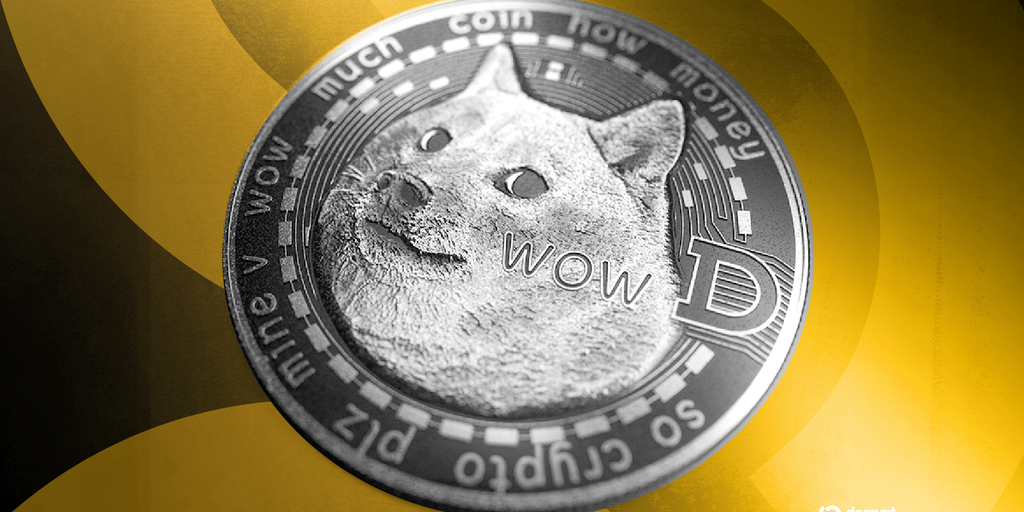
Dogecoin found itself at the center of a controversial political storm, all while being embraced by traditional institutions.

Forget the hype. These are the LLMs that caught our attention in 2025—from autonomous coding assistants to vision models processing entire codebases.

Looking for the year's best games to play with friends and family? From Donkey Kong Bananza to Borderlands 4, these are our co-op picks.

The Las Vegas Sphere is currently adorned with the cartoon creatures of crypto-native brand Pudgy Penguins. Here's how it happened.

Venture capital funding for crypto gaming all but evaporated this year, causing games to shut shop and players to lose their communities.

Solana opened 2025 with major momentum, thanks to the Trump meme coin and a new all-time high. But the year wasn't all up and to the right.

Shift4, a U.S. payments giant handling over $200 billion in annual volume for more than 200,000 businesses, has launched a stablecoin settlement platform for its merchants.
In a Dec. 22 press release, the Pennsylvania-headquartered public company said merchants can now choose to be paid in stablecoins such as USDC, USDT, EURC, or even DAI. As Shift4 explained, these currencies “are already used globally for cross-border commerce, remittances, payroll, B2B settlement, and treasury management.”
Merchants can also choose from networks such as Ethereum, Solana, Plasma, Stellar, Polygon, TON, and Base, with additional networks “added over time,” the firm said.
To continue reading this as well as other DeFi and Web3 news, visit us at thedefiant.io

Despite launching in 2020, Polymarket really put itself on the map in November 2024 following the U.S. presidential election; however, 2025 brought unprecedented growth for a crypto-native app, as the decentralized prediction market has evolved into an international information resource often cited by the world’s top media outlets.
Just 18 months ago, Polymarket was well into its fourth year of operations, processing between $10 million and $30 million in volume per week. In November 2024, however, the platform shattered expectations, processing more volume in a 5-day period than it did throughout all of 2023.
For context, the prediction market’s volumes in 2023 were miniscule, with less than $1 million being traded on some days.
To continue reading this as well as other DeFi and Web3 news, visit us at thedefiant.io

Cryptocurrency markets extended their losses on Wednesday, with Bitcoin trading below the $87,000 mark. Most major altcoins are trading lower as well, with the total cryptocurrency market capitalization at roughly $3.03 trillion, down about 0.8% over the past 24 hours.
Bitcoin (BTC) is trading around $86,995, down roughly 0.5% on the day, while Ethereum (ETH) is hovering near $2,936, lower by about 0.8%.
To continue reading this as well as other DeFi and Web3 news, visit us at thedefiant.io

Despite being the most influential new decentralized finance (DeFi) product of 2024, Solana-based memecoin launchpad pumpfun is struggling after launching its token this year, and following a new development in the platform’s ongoing legal dispute, the PUMP token is now trading more than 50% below its ICO price.
PUMP is now changing hands at a fully diluted valuation (FDV) of just $ 1.7 billion and a market capitalization of $1 billion.
To continue reading this as well as other DeFi and Web3 news, visit us at thedefiant.io

Decentralized perpetuals exchange and Layer 1 blockchain Hyperliquid has unveiled two new features in pre-alpha: portfolio margin and its BLP Earn vaults.
Founder Jeff Yan announced the change in the Hyperliquid Discord, and says the “initial rollout has intentionally low caps as safeguards, with HYPE as the only collateral asset and USDC as the only borrowable asset. USDH will be added as borrowable, and BTC will be added as collateral in a future upgrade.”
Portfolio margin unifies users’ spot and perpetuals trading accounts for greater capital efficiency. The pre-alpha phase is gated to accounts with more than $5 million in all-time volume, with a $1 million USDC global borrow cap and a $1,000 USDC per-user borrow cap in the initial stage.
To continue reading this as well as other DeFi and Web3 news, visit us at thedefiant.io

Crypto-linked stocks had a banner start to 2025, then spent the rest of the year learning that narrative alone doesn’t compound.

A crowded release slate buried plenty of standout games this year, so we’ve pulled together a list of hidden gems that still deserve your attention.

A burst of social-media sleuthing has focused on alleged redaction failures in newly released DOJ documents—raising real questions about digital security and viral misinformation.

Cryptocurrency markets fell sharply on Tuesday, with Bitcoin sliding back below $88,000 after briefly trading above $90,000 on Monday. Most major digital assets are trading lower, with the total cryptocurrency market capitalization standing at about $3.04 trillion, down 2.4% over the past 24 hours.
Bitcoin (BTC) is trading around $87,383, down about 2.4% on the day, while Ethereum (ETH) is holding near $2,957, down roughly 2.7%.
To continue reading this as well as other DeFi and Web3 news, visit us at thedefiant.io

The Aave alignment saga rages on after founder Stani Kulechov declared Aave Labs’ intent to vote against BGD Labs’ tokenholder alignment proposal from earlier this week, with voting commencing on Dec. 21.
Following last week’s governance dispute over CoWSwap interface fees, Ernesto Boado, the co-founder of BGD Labs and former CTO at Aave Labs, released a token alignment proposal to bring clarity to the ecosystem’s dynamics and to shift more control from Aave Labs to the DAO.
On Dec. 18, Kulechov responded in the forums with the intent to vote “no” on the proposal. The Aave Labs founder was quick to emphasize the importance of open dialogue within the DAO and to state that Aave Labs is “100% committed” to improving communication.
To continue reading this as well as other DeFi and Web3 news, visit us at thedefiant.io

Most token launches in 2025 failed to reward early buyers, with projects that debuted at lower fully diluted valuations (FDV) greatly outperforming their bigger, more hyped rivals, data from Memento Research shows.
The firm tracked 118 token launches in 2025 and found that more than 84% are now trading below their token generation event (TGE) valuations, with a median loss of more than 70%. Only 18 tokens are still in the green, while the rest have suffered substantial losses since launch.
To continue reading this as well as other DeFi and Web3 news, visit us at thedefiant.io

Polymarket airdrop speculation is ramping up after a screenshot emerged of a Polymarket team member saying that a Polymarket Layer 2 network is the prediction market’s “#1 priority.”
Polymarket just recorded its three highest-volume days since the U.S. presidential election in November 2024, with $91.7 million in trading volume on Dec. 19 and $92.7 million on Dec. 20. On Dec. 21, Polymarket processed $85.6 million, just above its most recent daily high of $85.07 million on Nov. 9, according to DeFiLlama.
To continue reading this as well as other DeFi and Web3 news, visit us at thedefiant.io

Major digital assets recorded modest gains on Monday, Dec. 22, as the market regained its footing ahead of the Christmas holidays following recent volatility.
Bitcoin (BTC) rose 2.5% over the past 24 hours to $90,125, while Ethereum (ETH) surged 3.2% to $3,060. Other large-cap coins also posted gains: BNB increased 2.3% to $867, XRP rose 2.2% to $1.94, and Solana (SOL) gained 3.3% to $128.
To continue reading this as well as other DeFi and Web3 news, visit us at thedefiant.io

Magma Devs, an engineering team building on the decentralized RPC routing protocol Lava Network, unveiled its RPC Smart Router on the Google Cloud Platform (GCP) Marketplace on Monday, Dec. 22.
The launch, in partnership with Google, aims to give companies a more reliable way to connect to public blockchains such as Ethereum, Solana, and Polygon. The Smart Router distributes blockchain requests across multiple providers, automatically selecting the fastest and most stable option in real time.
By avoiding reliance on a single access point, it seeks to prevent outages and reduce failed transactions or delays in decentralized applications, according to a press release viewed by The Defiant.
To continue reading this as well as other DeFi and Web3 news, visit us at thedefiant.io

Coinbase CEO Brian Armstrong is exploring different paths for the newly rebranded Base App, questioning whether its focus should be on finance, social features, or both.
In a Dec. 18 post, Armstrong noted that the platform currently functions as both a wallet and a social hub. However, he also admitted he’s hearing different takes on whether that’s the right direction for the app.
“Should Base app focus on being a self-custodial version of Coinbase (trading and financial services oriented) or lean into content/creator coins and social? (Or is this a false dichotomy.) This is a key question I heard from people coming out of the product event yesterday,” said Armstrong, referring to the Coinbase System Update 2025, where the exchange unveiled a set of new products.
To continue reading this as well as other DeFi and Web3 news, visit us at thedefiant.io

The Curve DAO has rejected a governance proposal to allocate 17.4 million CRV tokens, worth about $6.2 million, to the decentralized exchange’s (DEX) development team.
The proposal submitted by Curve Finance founder Michael Egorov sought approval for a grant of CRV tokens to fund Swiss Stake AG, the core development firm behind Curve, managed by Egorov.
The funding is intended to cover software development, infrastructure, security work and ecosystem support for Swiss Stake’s roughly 25-person team working on the protocol, which is the third-largest DEX in decentralized finance (DeFi) with over $2.1 billion in total value locked, according to DeFiLlama.
To continue reading this as well as other DeFi and Web3 news, visit us at thedefiant.io

Under loosened regulations from the Trump administration in the United States, both decentralized finance (DeFi) and centralized platforms are rushing to bring real-world assets (RWAs) onchain, with tokenized stocks being one of this year's breakout products.
According to TokenTerminal, the market capitalization of tokenized stocks stands at $831 million as of this week, compared to just $32 million at the beginning of 2025, a 2496% increase.
To continue reading this as well as other DeFi and Web3 news, visit us at thedefiant.io

Charles Hoskinson explains the "poisoned transaction" Cardano hack that took place back in November, and how it split the chain in two: “I don’t wanna have figure out, like, ‘How do we reimburse all these guys?’ They were honestly following the protocol, their nodes didn’t understand that there was a split.”

Cardano co-founder Charles Hoskinson talks hash vs lattice-based cryptography, and how November's “poisoned transaction” hack could have destroyed Cardano if they were BFT-based “Ethereum is embracing STARKs and hash-based crypto. [Cardano is] embracing lattice-based crypto on our side. You know, it’s Blu-ray vs HD DVD, we’ll see which one the market picks.”

LEO, the native token of the iFinex — the parent company of Bitfinex and Tether — outperformed the broader cryptocurrency market on Friday, Dec. 19 following Bitfinex’s decision earlier this week to scrap all trading fees.
The token is currently changing hands at $7.40, up 11% on the day, according to data from CoinGecko, pushing it into the top gainers today. The surge follows a few days of losses for the token, which was trading as high as $9.51 just a week ago.
To continue reading this as well as other DeFi and Web3 news, visit us at thedefiant.io

Cryptocurrency exchange Coinbase filed lawsuits in Connecticut, Illinois, and Michigan this week to stop the states from applying local gambling laws to prediction markets.
In an X thread yesterday evening, Dec. 18, Coinbase’s chief legal officer Paul Grewal said the company believes these markets should fall under the Commodity Futures Trading Commission’s (CFTC) federal oversight, not state gaming regulators. “State efforts to control or outright block these markets stifle innovation and violate the law,” Grewal wrote.
Coinbase's CLO emphasized that prediction markets differ from casinos, noting that while casinos win only if players lose and set odds to maximize profits, prediction markets “are neutral exchanges, indifferent to price, that match buyers and sellers.”
To continue reading this as well as other DeFi and Web3 news, visit us at thedefiant.io

Hackers linked to the government of North Korea largely avoided using DeFi lending protocols to swap and obscure stolen cryptocurrency in 2025, even as they laundered record volumes.
According to a new report by blockchain forensics firm Chainalysis, hackers reportedly linked to the government of the Democratic People’s Republic of Korea (DPRK) stole at least $2.02 billion worth of crypto in 2025, bringing the cumulative total DPRK-linked losses to $6.75 billion.
Despite fewer confirmed incidents, DPRK-linked groups accounted for 76% of all service compromises, relying on large attacks followed by laundering cycles lasting roughly 45 days. When it comes to DeFi, the report shows a sharp divergence in how North Korean hackers operate compared with other threat actors.
To continue reading this as well as other DeFi and Web3 news, visit us at thedefiant.io

Commission-free stock and etf trading (u.S.), allowing users to trade equities alongside crypto using usd or usdc. Prediction markets, enabling trading on real-world outcomes like elections, sports, and economic data via a partnership with kalshi. Equity futures and perpetuals trading, expanding derivatives access directly inside the main coinbase app. Solana dex trading via jupiter, allowing users to swap solana tokens directly on coinbase. New borrowing functionality against btc and eth holdings. Coinbase token sales, allowing for ico launches and early-stage token support. Coinbase tokenize, an institutional platform designed to support tokenized assets, including tokenized stocks over time. Base app global launch, making coinbase’s onchain “everything app” available in more than 140 countries. Coinbase business, now generally available, offering payments, invoicing, and usdc-based tools for companies. Expanded stablecoin and payments apis, including embedded wallets and custom-branded stablecoins for builders. Coinbase advisor, an ai-powered assistant designed to help users navigate portfolios and coinbase products.

Crypto markets were stagnating on Friday, Dec. 19, with Bitcoin and other major tokens seeing little change on the day as traders digest November's inflation data, which was cooler than expected.
The total cryptocurrency market capitalization stood at roughly $3.06 trillion, little changed over the past 24 hours. Bitcoin (BTC) slipped about 0.4% on the day to trade near $88,000 at press time, extending its pullback after repeated failures to reclaim the $90,000 level.
To continue reading this as well as other DeFi and Web3 news, visit us at thedefiant.io

Decentralized derivatives protocol Synthetix is launching a perpetual derivatives DEX on Ethereum, which will use a hybrid onchain-offchain order matching system to bypass Ethereum mainnet's latency and high gas fees.
The launch will debut with Bitcoin, Ethereum, and Solana derivatives with up to 50x leverage, surpassing most competitors, which typically offer between 20x and 40x leverage on their largest assets.
In the future, the Synthetix perp DEX plans to offer features including multicollateral margin, RWA support, incentives programs, and future integrations and compatibility across Ethereum DeFi, according to a press release shared with The Defiant.
To continue reading this as well as other DeFi and Web3 news, visit us at thedefiant.io

Cardano’s Charles Hoskinson says the U.S. government needs much more rigorous testing when it comes to deciding which cryptocurrencies are considered valuable and which are not. “Why is XRP in the system but not Sui? Why is Solana in the system but not BNB? Can we objectively answer that against some metric?”

Charles Hoskinson comments on Trump's meme coin, the president's impact on crypto, and how the government ruined the super cycle: “The minute that Trump Coin got launched. It went from ‘crypto is bipartisan’ to ‘crypto = Trump = bad = corruption.'"

Lido DAO, the decentralized organization behind the largest liquid staking protocol in DeFi, is signaling plans to push beyond its core ETH staking business next year.
The plan, titled “2026 Ecosystem Grant gRequest (EGG): Executing GOOSE-3,” lays out a $60 million budget for new products as Lido seeks to move beyond just a single-product, staking-focused model. According to the proposal, Lido wants to develop new earn products and vault structures designed for different users, including on-chain treasuries and even regulated entities.
“The proposed focus for the Foundations in 2026 shifts towards evolving Lido’s position from a single-product protocol focused on liquid staking to an innovative organization with a product portfolio by expanding the product offering, creating new revenue streams and ensuring long-term protocol resilience,” the proposal reads. Liquid staking protocols let traders keep their staked assets usable while still earning staking rewards.
To continue reading this as well as other DeFi and Web3 news, visit us at thedefiant.io

Intuit, the fintech company behind TurboTax, QuickBooks, and Credit Karma, said Thursday, Dec. 18, that it has partnered with USDC issuer Circle to add stablecoin capabilities across its platform.
The multi-year agreement will let Intuit use Circle’s infrastructure, as well as USDC itself, to enable faster, lower-cost, and programmable financial transactions for consumers and businesses, according to an official press release from Circle. USDC is currently the second-largest stablecoin, with a market capitalization of nearly $78 billion.
The integration aims to make refunds, remittances, payments, and savings faster and more efficient across Intuit's platforms. The financial management firm said it will leverage its customer base and data to provide quicker access to funds and streamline financial workflows.
To continue reading this as well as other DeFi and Web3 news, visit us at thedefiant.io

United States-based digital bank SoFi Technologies unveiled SoFiUSD, a 1:1 cash-backed U.S. dollar stablecoin issued by SoFi Bank. The move makes SoFi the first U.S. national bank to release an “open access” stablecoin as the line between traditional and digital finance continues to blur.
The neobank announced the move today, Dec. 18, just over one month after the bank relaunched crypto trading. SoFi products tout “bank-grade safety” that are able to be integrated with other leading traditional finance services. The firm said in the announcement that the stablecoin will use a "public, permissionless blockchain," without specifying which network, but noting that "partners can move funds around the clock with near-instant settlement at fractional-cent pricing."
SoFi says its stablecoin is backed 1:1 by cash reserves held in its Federal bank account, ensuring immediate redemption. The bank also noted that SoFiUSD can be used for settlement not only for its crypto trading offerings, but also across partner card networks and businesses, as well as international remittances and point-of-sale transactions made with SoFiPay.
To continue reading this as well as other DeFi and Web3 news, visit us at thedefiant.io

Markets are mixed on Thursday morning as cryptocurrencies failed to extend Wednesday’s short-lived rebound. Bitcoin and Ethereum traded slightly higher on the day, though prices remain range-bound after recent volatility.
The total cryptocurrency market capitalization stands at about $3.05 trillion, up 2% over the past 24 hours. Bitcoin (BTC) climbed about 1% in the last 24 hours, trading around $88,200 at press time after failing to hold above the $90,000 level.
To continue reading this as well as other DeFi and Web3 news, visit us at thedefiant.io

Crypto majors were mixed; btc+0.3% at $87,400; eth -2% at $2,870; bnb -2% at $838, sol -3% at $124. Beat (+26%), pippin (+9%) and cc (+4%) led top movers. Coinbase announced several new products last night, including prediction markets, stock trading, equity perps, ai advisors, borrowing, full dex integration and more. Senators proposed the safe crypto act, creating a federal task force to coordinate agencies on crypto scam enforcement and investor protection. The dtcc said it will issue tokenized securities on canton network, starting with tokenized u.S. Treasuries. Ex-alameda ceo caroline ellison left federal prison after 11 months, moving to another government facility or home confinement to serve the rest of her 2-year sentence. The acting cftc chair caroline pham left to join moonpay as its chief legal and administrative office. Citadel and other big banks are planning to spend $100m in the 2026 midterms, potentially opposing pro-crypto spending. Circle announced its arc builders fund, meant to support early-stage teams building apps and services on arc.

Tokenization firm Superstate said on Thursday, Dec. 18, that tokenized public equities issued through its Opening Bell platform are now available as collateral on Kamino, the largest lending protocol on Solana, with $2.24 billion in total value locked (TVL).
The launch allows eligible investors outside of the United States to borrow stablecoins on Kamino using tokenized shares of publicly traded companies, according to a press release viewed by The Defiant. Superstate said that this is the first time SEC-registered, exchange-listed equities have been used directly as collateral in a decentralized finance (DeFi) protocol, while borrowers retain exposure to the underlying shares.
The integration reflects broader efforts to make tokenized assets more composable and liquid, connecting regulated securities with DeFi — especially through compliant issuance and transfer agent infrastructure.
To continue reading this as well as other DeFi and Web3 news, visit us at thedefiant.io

Cryptocurrency exchange Coinbase said it plans to launch Coinbase Tokenize, an institutional platform designed to bring real-world assets (RWAs) on-chain.
Speaking during the “Coinbase System Update 2025” presentation on Dec. 17, Coinbase CEO Brian Armstrong described Coinbase Tokenize as “our end-to-end solution for bringing off-chain assets on-chain,” combining “issuance, custody, compliance, and trading all in one place.”
Armstrong said the platform is intended to support a wide range of assets, “from equities to private companies, funds, real estate, and more, adding that Coinbase’s existing partners and user base mean the pieces are already in place for its Tokenize platform:
To continue reading this as well as other DeFi and Web3 news, visit us at thedefiant.io

Fragmentation across blockchain networks is costing the tokenized real-world asset (RWA) market hundreds of millions of dollars a year, according to new research from data analytics platform RWAio.
The report, created with input from 17 companies including Coinbase, Franklin Templeton, and Polygon, estimates that fragmentation across blockchains is causing between $600 million and $1.3 billion in lost value each year. Currently, the total value of tokenized real-world assets in circulation, including private credit, U.S. Treasury debt, and commodities, has reached over $36 billion.
RWAio found that the same assets often trade at different prices on different blockchains, with price gaps of 1-3%. Meanwhile, moving assets between chains can cost investors 2-5% per transaction due to fees and slippage. Ethereum currently holds 52% of all tokenized RWA value, while Polygon accounts for 62% of tokenized bonds.
To continue reading this as well as other DeFi and Web3 news, visit us at thedefiant.io

A major driver behind Hyperliquid’s success in 2025 is its buyback system, with the Hyperliquid Assistance Fund (AF) buying back more than 37 million HYPE tokens since its inception. While most supporters considered the tokens in the AF already burned, as they were removed from circulation, the Hyper Foundation is looking to make it official.
An announcement on Dec. 16 from the Foundation reads: “The Hyper Foundation is proposing a validator vote to formally recognize the Assistance Fund HYPE as burned, removing the tokens permanently from the circulating and total supply.”
If passed, the roughly $920 million worth of HYPE currently in the Hyperliquid Assistance Fund, plus future revenues, would be permanently burned.
To continue reading this as well as other DeFi and Web3 news, visit us at thedefiant.io

The Depository Trust & Clearing Corporation (DTCC) announced that it has selected the Canton Network to tokenize a subset of the U.S. Treasury securities it holds, highlighting the platform’s privacy features amid a rising debate over financial confidentiality in digital assets.
The pilot, scheduled for the first half of 2026, will allow DTCC for the first time to mint Treasuries on the Canton Network, a Layer 1 blockchain designed for banks, exchanges, and other financial infrastructure. The process will employ DTCC’s ComposerX platforms, according to a press release from DTCC.
The partnership serves as an example of one way institutional plays are looking to adopt blockchain technology for efficiency, but without compromising confidentiality. Yuval Rooz, co-founder and CEO of Digital Asset, the firm behind Canton, said that the L1 was chosen because most public blockchains cannot meet the confidentiality needs of larger market participants.
To continue reading this as well as other DeFi and Web3 news, visit us at thedefiant.io

Yield aggregator Yearn Finance finds itself licking its wounds after yet another exploit, this time to the tune of $300,000.
Security firm PeckShield confirmed the incident on Tuesday evening, Dec. 16, reporting that the exploiter was able to swap the stolen funds for 103 ETH, worth approximately $290,000 at current prices.
The recent hack is Yearn’s second in the last month, though today’s is much smaller than the $9 million loss at the beginning of the month.
To continue reading this as well as other DeFi and Web3 news, visit us at thedefiant.io

Sberbank, Russia’s largest bank — currently under U.S. and EU sanctions — is piloting “various instruments from the world of decentralized finance” as it anticipates a future convergence between decentralized and traditional finance.
In a recent interview with Russian business media outlet RBC, Sberbank management board deputy chairman Anatoly Popov declined to specify which DeFi tools the bank is testing. However, he noted that any meaningful integration would depend first on a clear regulatory regime in the country.
“We are confident that in the future traditional banking and DeFi will work in convergence. Legal crypto markets in Russia are only emerging. Ahead lies a long road: developing regulation, building infrastructure, filling it with new products and creating a liquid secondary market,” Popov told RBC.
To continue reading this as well as other DeFi and Web3 news, visit us at thedefiant.io

Crypto majors were mostly flat; btc -0.3% at $87,000; eth -1% at $2,930, bnb -1% at $858, sol even at $128. Night (+11%), morpho (+10%) and myx (+5%) led top movers. Bitwise forecasted new bitcoin all-time highs in 2026, pointing to structural factors like institutional capital inflows, regulatory clarity, and continued adoption to outweigh historical bearish factors. The sec ended its four-year investigation into aave, closing the file without recommending enforcement action. Visa expanded its stablecoin pilot to more us banks and to include settlement on solana. The fdic approved a proposal to implement the genius act, outlining how fdic-supervised banks could issue payment stablecoins through subsidiaries. Trump said he would be open to nominating democrats to the sec and cftc, a shift that could help unblock the stalled senate crypto market-structure bill. Elizabeth warren raised concerns about dex risks, flagging pancakeswap and alleging links to trump-connected flows and north korea–tied laundering. The ftc said nomad must repay recovered funds after the $186m 2022 bridge hack. Hong kong influencers face charges related to their promotion of the collapsed jpex exchange, which left investors with roughly $206 m in losses. The south korean government approved about $15m in debt relief for crypto traders.

Markets showed tentative signs of relief on Wednesday morning, Dec. 17, after several sessions of losses, with Bitcoin and all of the top-20 crypto assets trading slightly higher. The total cryptocurrency market capitalization stands at about $3.12 trillion, up 1.4% over the past 24 hours.
Bitcoin (BTC) rallied sharply this morning, gaining over 3% on the day to briefly break back above $90,000, though the largest cryptocurrency is still down 2.5% on the weekly timeframe. BTC is currently trading just below the $90,000 mark at press time.
To continue reading this as well as other DeFi and Web3 news, visit us at thedefiant.io

Uniform Labs, a blockchain infrastructure company founded by former team members of Standard Chartered and UniCredit, on Dec. 17 announced the launch of Multiliquid, a protocol designed to provide instant liquidity for tokenized assets.
The tokenized real-world asset (RWA) market currently boasts a total distributed asset value of over $18.7 billion, including private credit, real estate, private equity, and Treasury funds, per RWAxyz. However, most of these assets are hard to sell quickly because redemptions depend on the issuer.
Multiliquid attempts to address this challenge by allowing instant swaps between blue-chip tokenized money market funds (MMFs) and stablecoins. The protocol will start with USDC and USDT, with additional stablecoins to be added later, according to a press release viewed by The Defiant.
To continue reading this as well as other DeFi and Web3 news, visit us at thedefiant.io

Aave is at the center of a governance dispute after the DAO and Aave Labs clashed across forums and social media, initially over fee distribution. But the debate has turned into a full-blown indictment of how many major crypto organizations are structured.
At the core of the disagreement is the question of what role should DAOs and companies play, and the difference between token holders and equity holders.
In response, Ernesto Boado, co-founder of BGD Labs and former CTO at Aave Labs, proposed a multi-phase token alignment proposal aimed at clarifying the role and rights of AAVE tokenholders.
To continue reading this as well as other DeFi and Web3 news, visit us at thedefiant.io

Crypto majors were very red to start the week; btc -3% at $87,200; eth -6% at $2,950, bnb -2% at $868, sol -3% at $128. Xdc (+4%), cc (+3%) and sky (+2%) led top movers. Jpmorgan launched a tokenized money-market fund on ethereum, using onchain rails to settle fund shares. The senate punted the crypto market-structure markup to next year, delaying near-term progress on a major u.S. Framework bill. Coinbase and robinhood joined the new u.S. ‘tech force’ aimed at recruiting top engineers to build ai infra for the government. Metamask expanded beyond ethereum by adding native bitcoin support, letting users buy, send, and receive btc inside the wallet. Paypal applied for a bank charter in utah as its next potential step into the traditional banking system. Trump said he would “look at” pardoning samourai wallet developer keonne rodriguez, directing the attorney general to investigate the request ahead of his prison reporting date. Grayscale argued quantum computing was unlikely to move crypto valuations in 2026, while warning chains still needed long-term post-quantum upgrade planning. Bittensor (tao) completed its first halving event with issuance dropping from 7,200 tokens/day to 3,600.

Crypto majors were very red to start the week; btc -3% at $87,200; eth -6% at $2,950, bnb -2% at $868, sol -3% at $128. Xdc (+4%), cc (+3%) and sky (+2%) led top movers. Jpmorgan launched a tokenized money-market fund on ethereum, using onchain rails to settle fund shares. The senate punted the crypto market-structure markup to next year, delaying near-term progress on a major u.S. Framework bill. Coinbase and robinhood joined the new u.S. ‘tech force’ aimed at recruiting top engineers to build ai infra for the government. Metamask expanded beyond ethereum by adding native bitcoin support, letting users buy, send, and receive btc inside the wallet. Paypal applied for a bank charter in utah as its next potential step into the traditional banking system. Trump said he would “look at” pardoning samourai wallet developer keonne rodriguez, directing the attorney general to investigate the request ahead of his prison reporting date. Grayscale argued quantum computing was unlikely to move crypto valuations in 2026, while warning chains still needed long-term post-quantum upgrade planning. Bittensor (tao) completed its first halving event with issuance dropping from 7,200 tokens/day to 3,600.

U.S. Securities and Exchange Commission (SEC) Commissioner Hester Peirce said financial surveillance rules need to be rethought as crypto technology changes how much visibility the government has into users’ financials.
Commissioner Peirce made the comments on Monday, Dec. 15 at the sixth roundtable organized by the SEC’s Crypto Task Force, which was created this year and is led by the commissioner. Regulators met up in Washington, D.C. to discuss privacy, financial monitoring and the growing use of digital assets.
The discussion underscores growing agreement among experts and regulators that crypto will not see wider use unless people and businesses can feel like they can transact privately, without exposing sensitive financial information.
To continue reading this as well as other DeFi and Web3 news, visit us at thedefiant.io

A decision to rewrite a blockchain’s recent history to make users whole is exposing fault lines over governance, and precedent on Gnosis Chain.
In a governance forum post on Dec. 12, Philippe Schommers, Gnosis’ head of infrastructure, said the network would need to undergo a hard fork to return funds frozen during the recent exploit of DeFi protocol Balancer.
If everything goes according to plan and validators update their software on time, the hard fork is expected to activate at 16:11 UTC on Dec. 22. Nodes that fail to follow the chain with a majority of stake “will get penalized,” Schommers wrote, adding that the team is currently focused on returning user funds by Christmas.
To continue reading this as well as other DeFi and Web3 news, visit us at thedefiant.io

Payments giant Visa Inc. launched USDC settlement today in the United States, allowing U.S. issuer and acquirer partners to settle transactions via Circle’s stablecoin using Visa’s payments rails.
The move begins with two initial banking participants, Cross River Bank and Lead Bank, using USDC on the Solana blockchain, with partner expansion expected in 2026. Visa initially launched the pilot program for Solana-based USDC settlement in September 2023.
Visa stablecoin settlement is expected to also launch on the upcoming Arc Layer 1 blockchain, which is the stablecoin-focused chain developed by Circle, in collaboration with Visa as a design partner.
To continue reading this as well as other DeFi and Web3 news, visit us at thedefiant.io